Blanks vs Cut and Sew: Which Production Route Fits Your Streetwear Line?
Short answer
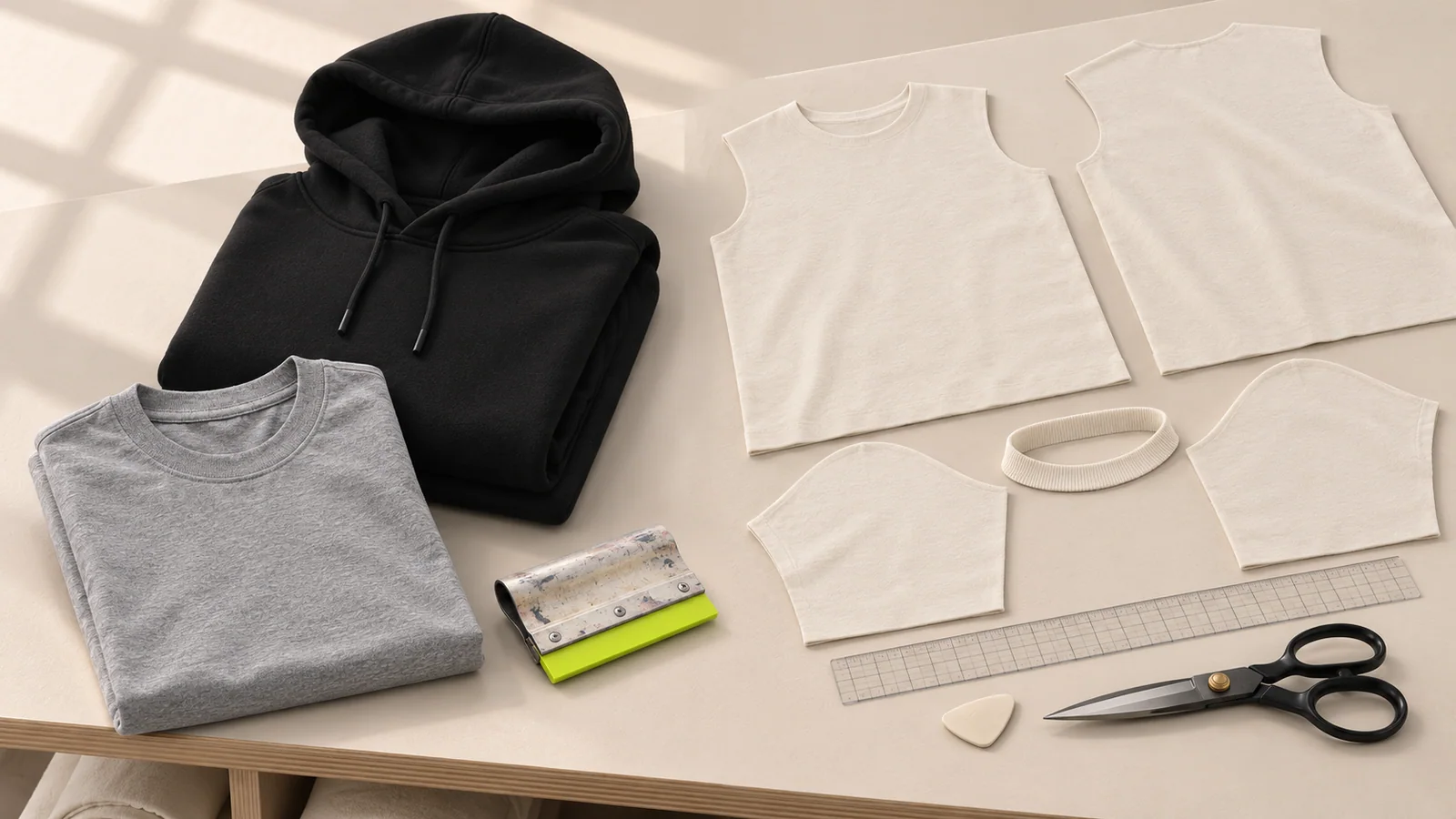
Blanks, meaning finished stock garments that you print, embroider and relabel, are usually the faster way to test graphics and demand with little development work. Cut and sew, meaning your own pattern, fabric and trims, takes longer and asks for more decisions, but it is the route that gives a streetwear brand control over fit, fabric weight, wash and construction. You don't have to pick one route for everything: decide per product, and a tee and a hoodie in the same drop can sit on different routes.
Scope and evidence. This guide compares production routes in general terms. Timing, minimums and costs differ by supplier and product. The only figures given as STREETTEECO's own are in the section on working with us. Notes on labeling are pointers, not legal advice.
Choosing between blanks and cut and sew is usually the first real production decision a new clothing brand makes, and it shapes everything after it: what you sample, how much you order, and whether your next order can be the same product. This guide looks at the blanks vs cut and sew question the way a streetwear brand meets it, with heavyweight tees, boxy fits, washes and hoodies in the range.
What each route means for a streetwear brand
The blank route. You choose a body from a blank supplier's catalog, with its pattern, fabric, colors and size run already fixed. Then you decorate it with screen print, embroidery or DTF, and usually relabel it by removing or covering the original neck label and adding your own label, hang tag and packaging. The garment decisions belong to the blank maker. Yours are the artwork and the presentation.
The cut-and-sew route. The garment is made to your specification: pattern and grading, fabric composition and weight, collar rib, colors, construction details, and labels sewn in during production. Every measurement is a decision, and the first physical result is a development sample rather than a catalog item.
In between are blanks with heavier finishing, such as garment dye on a prepared-for-dye blank, or custom labels and embroidery. These change the look more than a print does, but the pattern and fabric still come from the blank.
Where blanks run out in streetwear
Streetwear is often sold on the garment as much as the graphic. The details customers notice first are the ones a catalog blank decides in advance:
Compare the Oversized Drop-Shoulder Tee and Heavyweight Boxy Tee as starting points for a custom body: shoulder position, body length and fabric should be approved together.
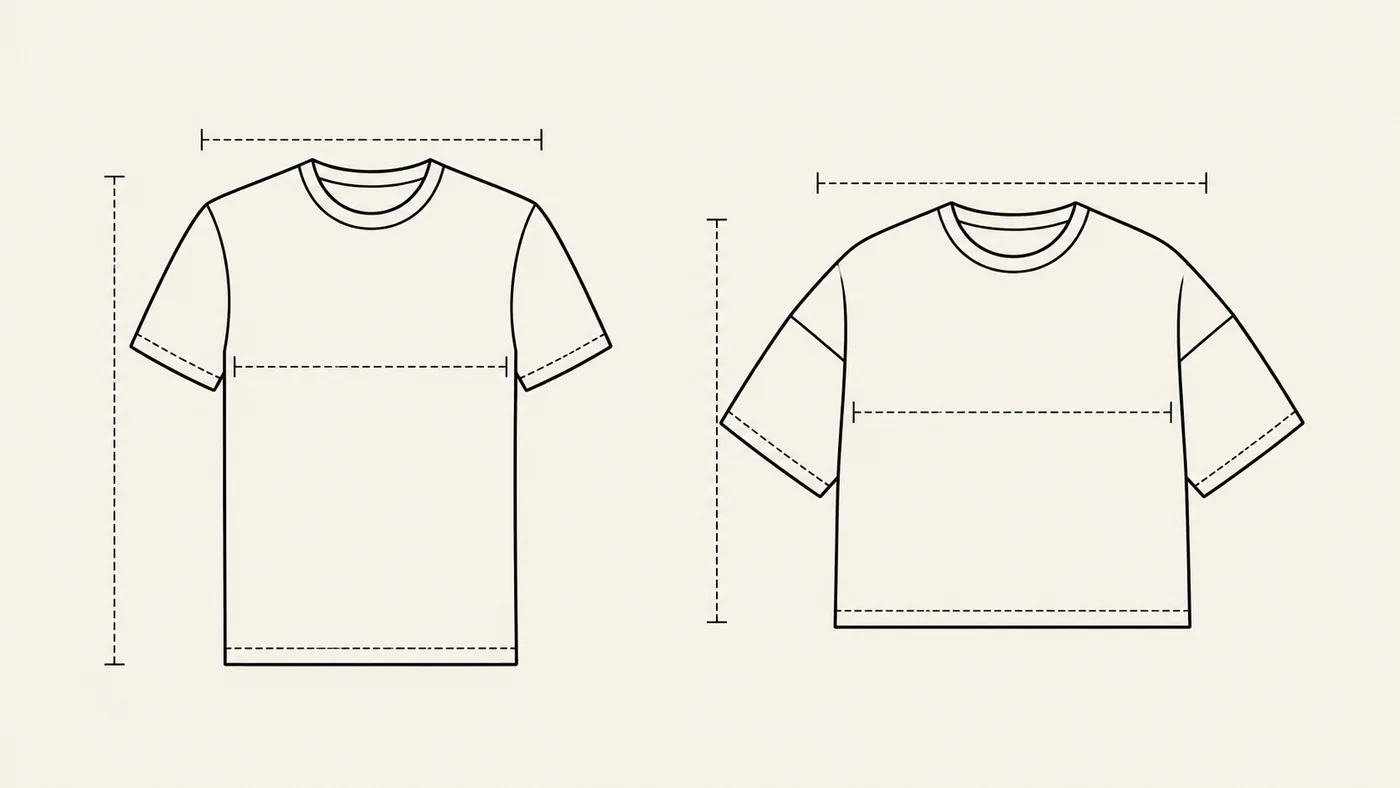
- Silhouette. Boxy, cropped, drop-shoulder and oversized shapes come from the relationship between chest width, body length, shoulder drop and sleeve width. Sizing up a regular blank is not the same as an oversized pattern, because the length and sleeves grow too. See the oversized T-shirt development guide.
- Fabric weight and hand. Blank ranges cover common weights. A specific heavyweight jersey, a dense collar rib or a particular surface may not exist in the color you want. The T-shirt GSM guide explains how weight changes drape and shape.
- Wash and dye character. Some blanks can be garment dyed or washed, but the result depends on the blank's fabric, thread and finishing, which you didn't choose. On a cut-and-sew garment, shrinkage from the wash can be planned into the pattern.
- Hoodie construction. Hood depth and shape, pocket placement, rib height, fleece face and weight, and drawcord details are all fixed on a blank hoodie.
- Neck finish and labels. Relabeling means working around the blank's existing neck tape, label position and stitching.
None of this makes blanks the wrong choice. It means the useful question is whether your brand's difference lives in the artwork or in the garment.
Blanks vs cut and sew, side by side
| Factor | Blank + decoration | Cut and sew |
|---|---|---|
| Development input | Choose a catalog body, then approve artwork, placement and labels | Define measurements, fabric, rib, colors, construction and trims, often starting from a tech pack or reference garment |
| Customization room | Artwork, decoration method, labels and packaging. Fit and fabric are fixed | Fit, fabric, weight, color, wash, construction and labels are all open |
| Sampling | Mainly decoration samples on the chosen blank | Samples of the garment itself first, then decoration and branding on the approved body |
| First order | Often flexible on small quantities, depending on blank stock and the decorator's setup minimums | Set by the factory's minimum per style and color, plus any fabric and trim minimums |
| Time to first bulk | Usually shorter, because the garment already exists | Longer, because pattern, fabric and sample approval come first |
| Reorders | Depend on the blank staying in stock in the same color and specification | Repeat against your own approved sample and specification |
| Differentiation | Other brands can buy the same body | The garment becomes part of the brand |
| Main risk | A key blank or color is discontinued or changed | More decisions up front, and mistakes show up at sample stage |
Neither column is cheaper by default. Blanks skip development work, but their unit price carries the blank maker's margin and stock risk. Cut and sew adds development and minimums, but you pay for the fabric and construction you actually specified. Compare quotes for the same finished product, with decoration, labels and packaging included.
Tees and hoodies don't have to share a route
When a brand leads with T-shirts and adds hoodies, it can choose the route per category. A few possible splits, and what each one costs you:
| Split | When it can make sense | What to watch |
|---|---|---|
| Custom tee, blank hoodie | The tee fit is the signature and hoodies are a seasonal add-on | The hoodie may not match the tee's color or fabric character |
| Blank tee, custom hoodie | A heavyweight hoodie is the hero piece and tees mainly carry graphics | Hoodies have more construction variables, so allow more sample review |
| Both custom | You want one fit language and matched colors across categories | Two sets of minimums and two development tracks |
| Both blank | The first drop is mainly a graphics and demand test | Least differentiation. Plan the move to custom before reorders |
If the tee and hoodie are sold as a set, remember that jersey and fleece take dye differently even on the same route. Approve both colors side by side, not one at a time. The guide to adding hoodies to a T-shirt line covers which brand details can carry across and which need their own sample.
Relabeling blanks: what to check first
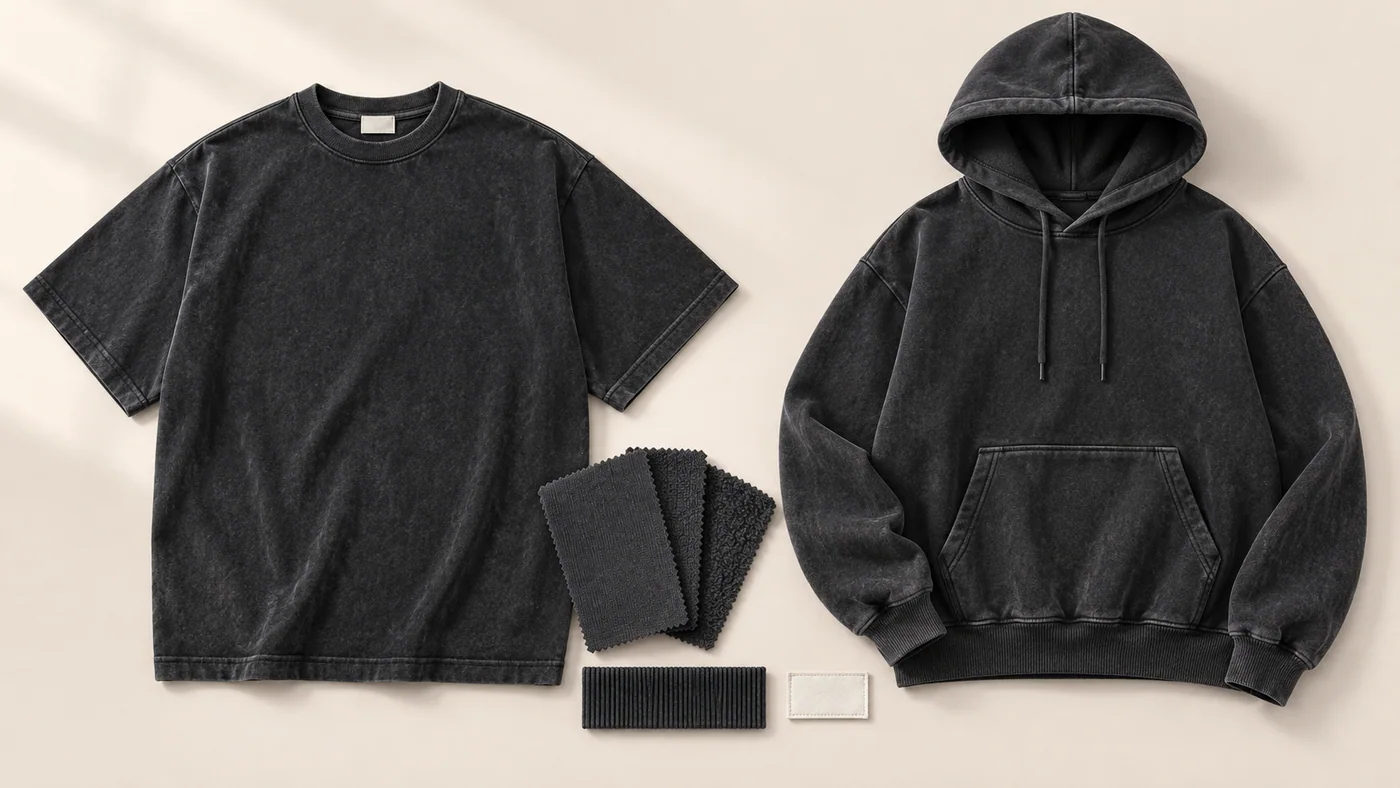
Relabeling turns a blank into a branded product, and there is more to it than swapping a tag:
- What label the blank has. Tear-away, printed and sewn labels each come out differently. Removing a sewn label after production can leave needle holes or a gap in the neck tape.
- Where your label goes. Neck, side seam or hem, and whether it is sewn, heat-transferred or printed.
- What information must stay. Many markets require fiber content, care instructions and country of origin on textile products, and some also require the identity of the company responsible. In the US, for example, the FTC's textile labeling and care labeling rules set out these requirements. Check the rules for every market you sell into before removing an original label.
- Who does it, and when. After delivery, at the decorator, or before packing.
On a cut-and-sew order, labels are part of the specification from the start. Care labels, neck labels, hang tags and packaging are applied in production and approved with the sample.
Sampling and reorders on each route
Blank route
The sample is mostly about decoration: print scale and placement, ink feel, embroidery density and label position. Wash the decorated sample the way a customer would and check shrinkage and print behavior, because you didn't set the fabric's finishing. Before a reorder, confirm the blank, color and size specification are still the same, and ask how changes would be communicated.
Cut-and-sew route
The first samples check the garment itself: measurements against your size specification, fabric hand and weight, collar and rib, shoulder and sleeve shape, then color and wash. Decoration and labels are confirmed on the approved body. A practical order is fit and fabric first, details after. The approved sample and specification then become the reference for bulk and for every reorder. That is where cut and sew pays back: the product is yours to repeat.
A quick way to decide
Answer these for each product in your first drop:
- Is the difference you sell the artwork or the garment? If it's the artwork, a blank can carry it. If it's the fit, weight or wash, look at cut and sew.
- Is there a blank you'd be happy to reorder unchanged for a year?
- Is the launch date fixed? Count backwards. Cut and sew needs time for development samples before bulk.
- Can the budget carry the minimums per style and color, plus samples? How MOQ is counted explains what sits under that number.
- Do the tee and hoodie need to match as a set? If they do, keep both on routes where you control color.
- How many units do you expect to sell? Size the order with the first-drop quantity guide.
If most answers point to the garment, develop the hero product as cut and sew and keep the rest of the drop simple. Once you know the route, choosing a streetwear manufacturer is the next step.
Working with STREETTEECO on a cut-and-sew project
STREETTEECO makes custom men's streetwear T-shirts, with hoodies as a coordinated secondary line, at our factory in Jiaxing, China. We work on the cut-and-sew side: pattern, fabric, decoration, private labels and packaging built to your specification. See custom T-shirt manufacturing and building a streetwear brand.
- Minimum order: 50 pieces per style per color.
- Development samples: 7–10 working days.
- Bulk production: 14–25 working days, counted from receipt of payment for the bulk order.
Exact timing for a project depends on the fabric, decoration and labels in the final specification, and is confirmed in the quote. You don't need a finished tech pack to start. A reference garment and target measurements are enough for a first conversation, and our tech pack support can turn them into a specification.
FAQ
Is it cheaper to start with blanks or cut and sew?
Blanks usually need less money up front, because there is no garment development and small quantities are often easier to arrange. Unit price is a separate comparison: compare quotes for the same finished product with decoration, labels and packaging included.
Can I start on blanks and switch to cut and sew later?
Yes, and many brands plan it that way. Keep notes on what customers said about the blank's fit and fabric, then send the blank as a reference garment with the changes you want, so the first custom sample starts from something known.
Do customers notice the difference between a blank and a custom tee?
It depends on the customer and the product. In streetwear, fit, fabric weight and the neck finish are the most visible differences, and a blank that many brands use may be recognizable to buyers who know it.
Can a hoodie be cut and sew while the tees stay on blanks?
Yes. The route can be chosen per product. Hoodies have more construction variables, such as the hood, pocket, rib and fleece, so they need their own sample review even when the branding matches the tees.
What should I send for a cut-and-sew quote?
Target measurements or a reference garment, fabric composition and weight, colors, artwork with placement, label and packaging needs, and the quantity per style and color.
Planning a custom tee or hoodie?
Send a reference garment, target fit, fabric weight and quantities per style and color. We'll reply with a development route and a sample plan.
Request a QuoteOrder a Sample