How to Choose a Streetwear Manufacturer for Tees and Hoodies
Short answer
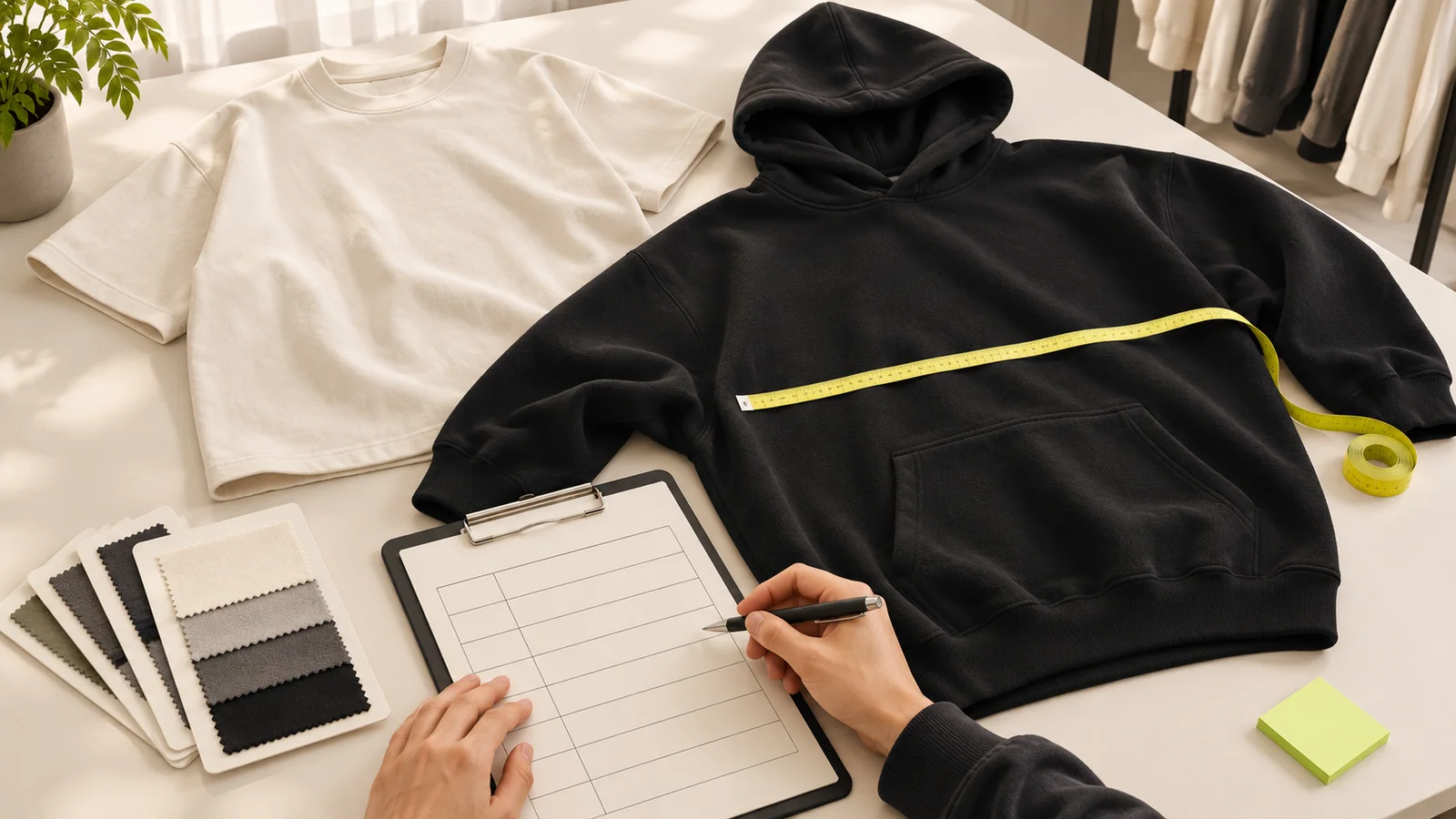
Judge a streetwear manufacturer on the product you actually want to make, not on general claims. Ask for examples of similar garments, find out which processes they run themselves and which go to partners, get a quote broken into line items, and agree how samples are approved and how bulk problems are handled before you pay for development. A vague answer is a reason to ask again, not proof of bad faith.
Scope and evidence. This is a buyer's checklist, not a ranking of suppliers, and it makes no judgment about any company. One unclear answer doesn't make a supplier dishonest. Ask a follow-up and compare answers in writing. STREETTEECO's own figures are given only in the last section.
Knowing how to choose a streetwear manufacturer is mostly about asking the right questions in the right order. Streetwear adds details that general T-shirt sourcing doesn't test: heavy jersey and fleece, boxy and oversized patterns, washes, puff prints and hoodies. The questions below are built around those details.
Start with your hardest detail
General capability tells you little about a streetwear program. Write down the one or two details your product can't do without and lead every conversation with them. Examples: a 300 GSM boxy tee that keeps its shape, a heavy fleece hoodie with a lined hood, a vintage wash on a dark color, or a large puff print across the back.
For product-specific discussions, use the Graphic Streetwear Tee to brief artwork placement or the Vintage Washed Streetwear Hoodie to brief wash character and fleece. Ask the supplier to sample the details that matter to your design.
A manufacturer that has made that detail can talk about it in specifics: what tends to go wrong, what they need from you, and what the sample will show. Put it in one line at the top of your brief, for example: "Hero product: heavyweight boxy tee, garment dyed, puff print on the back." The brand-building overview shows how a core product anchors the rest of a line.
Check product experience
- Ask for comparable garments. Look for photos or samples in the same category, at a similar weight and fit, and ask what was difficult about them.
- Ask about hoodies separately. Fleece, hood patterns, pockets and rib construction are different work from jersey tees. Experience with one doesn't prove the other.
- Ask about size range. If you need extended sizes, ask how far they usually grade and how they check fit at the ends of the range.
- Ask what input they work from. Can they develop a pattern from measurements or a reference garment, or only from a finished tech pack? See tech pack support for what a usable starting file contains.
Map the processes: in-house or partner
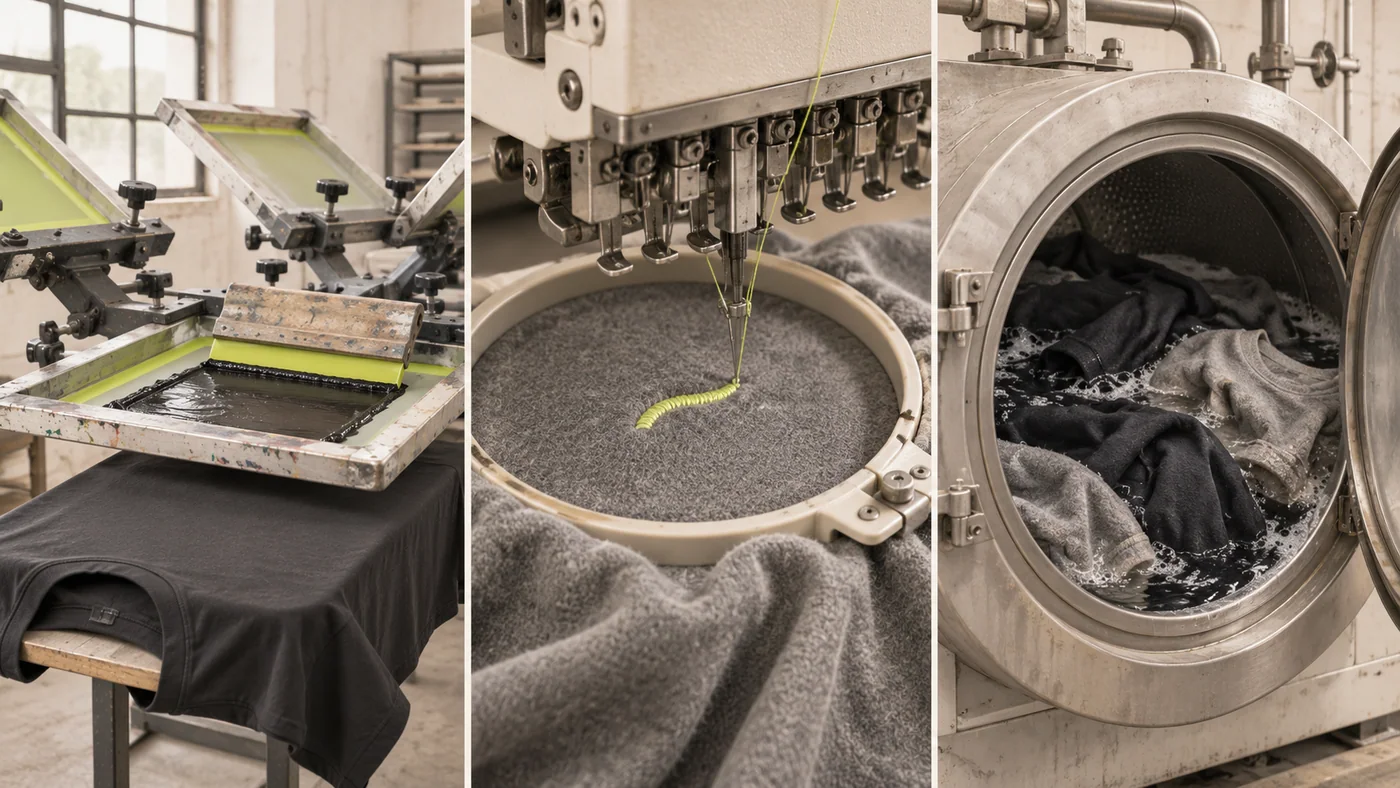
Few garment factories do everything under one roof. Printing, embroidery, garment dyeing and washing are often handled by specialist partners. That is normal, but you should know who does what, because it affects timing, communication, and who answers for a defect.
| Process | What to ask | A useful answer includes |
|---|---|---|
| Pattern and grading | Who makes and grades patterns, and from what input? | Who does it, what files they need, and how the size specification is recorded |
| Fabric | Is fabric stock or knitted and dyed to order? Which jersey and fleece weights? | Available options, fabric minimums, and how shrinkage is handled |
| Screen and puff print | In-house or partner? What is the largest print area? | Where it's done, setup per color, and how placement is checked across sizes |
| Embroidery | Flat, 3D or appliqué? On fleece as well as jersey? | Examples on similar fabric and how puckering is controlled |
| Garment dye and wash | Who washes, and how is shade consistency handled? | Shrinkage planning, shade tolerance, and what the sample represents |
| Labels and packaging | Woven or printed labels, care labels, hang tags, bags? | What they source, and the minimum for each trim |
Also ask which partner steps add time, and whether partner work is inspected before garments come back. Our print and finish methods page shows how one supplier lays out these options.
Ask for a quote you can compare
A single unit price hides the decisions inside it. Ask for line items, and only compare quotes that describe the same product. A breakdown can include:
- Garment: fabric composition, weight, style and fit
- Decoration per location and method, including setup or screen charges
- Wash or dye, if any
- Labels, hang tags and packaging, each listed separately
- Sample fees, and whether any part is credited against bulk
- Minimums per style, per color and per trim
- Lead time for samples and for bulk, and the event that starts the bulk clock
- Price terms such as EXW or FOB, and what freight, duties and insurance are excluded
When two quotes are far apart, the cause is usually a line that one of them left out. How MOQ is counted covers the minimums that often hide in those lines.
Agree how you'll communicate
- One named contact for the project, and who to reach when they're away
- How changes are recorded: a revised tech pack or specification sheet with a version or date, not only chat messages
- Expected response times across your time zones
- How photos and measurements are shared during sampling and bulk
A short written summary after each call or chat, covering what changed and who confirms it, prevents most later disagreements.
Define how the sample is approved
The approved sample is the reference for bulk, so agree these points before sampling starts:
- What the sample is for: fit, fabric, color, decoration, labels, or all of them
- How you give comments: on the measurement chart, as marked-up photos, or as a written list
- What counts as approval: a written confirmation of a specific sample, with photos and measurements kept by both sides
- What happens to open items: anything not ready at sample stage, such as a final label or color, and how it will be confirmed before bulk
The sample ordering page sets out a review order that keeps each round easy to compare.
Ask how quality problems are handled
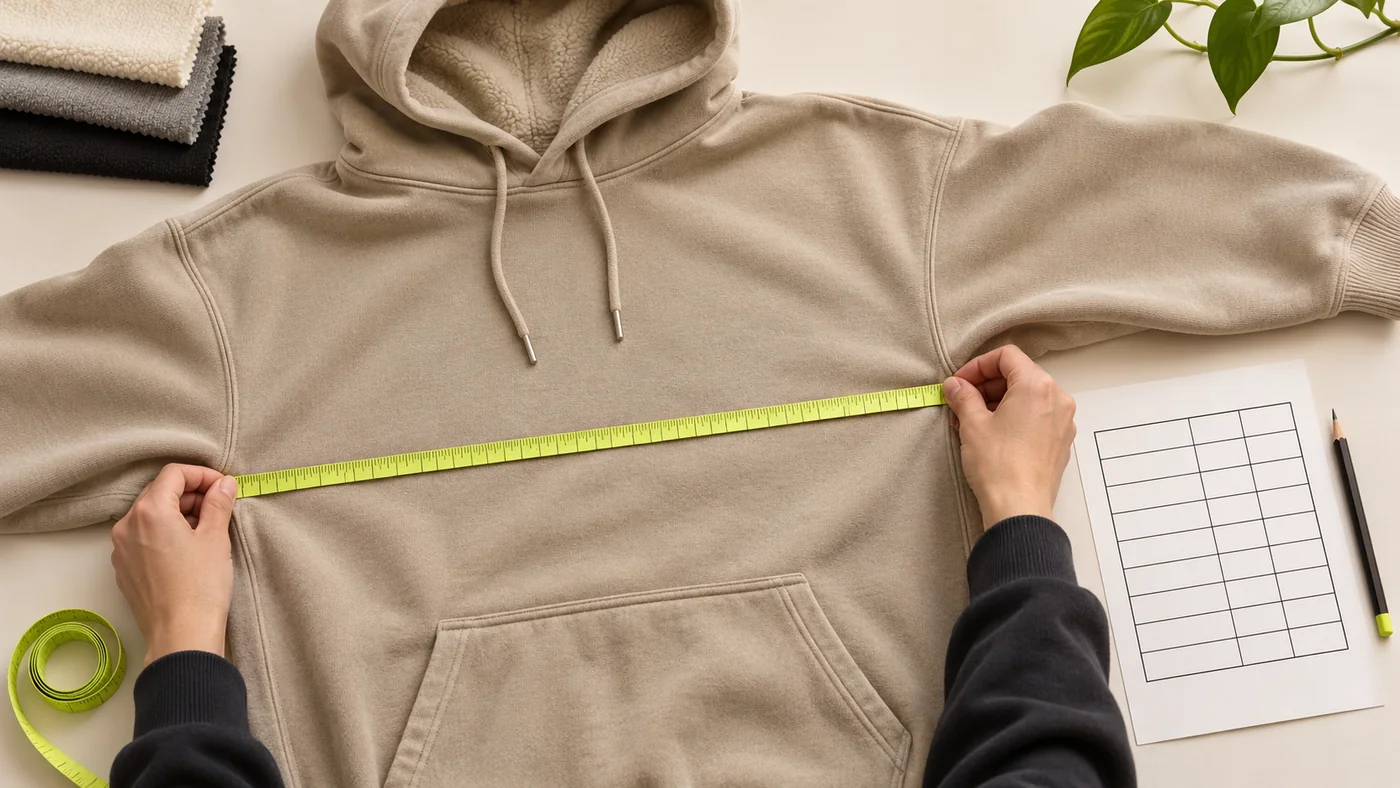
Problems can happen on any production run. What matters is that both sides agreed in advance how problems are found and settled:
- When inspection happens: incoming fabric, inline and final, and what it is checked against. It should be the approved sample and written specifications. See our quality standards.
- How final inspection is sampled, and whether you can bring a third-party inspector
- How a defect is reported: photos, counts, and the sizes and colors affected
- What the remedies are: repair, remake or credit, and the deadline for raising a claim
- Who is responsible when a partner process such as print or wash causes the issue
Signals that need a follow-up question
| What you see | Why it matters | Follow-up question |
|---|---|---|
| A price with no breakdown | You can't check or compare what is included | "Can you list fabric, decoration, labels and packaging separately?" |
| "Any quantity is fine" | Minimums usually exist somewhere: fabric, trims or setup | "What are the minimums per color for fabric and labels?" |
| A sample promised without detail | You don't know what the sample will prove | "Will the sample use bulk fabric and the final decoration?" |
| Unclear who prints or washes | Defects may be hard to trace | "Which steps are done by partners, and who inspects them?" |
| Chat only, no written specification | Agreed changes can get lost | "Can you send a specification sheet with the agreed changes?" |
| Pressure to pay before details are fixed | You may pay for the wrong product | "Can we confirm the specification and quote in writing first?" |
An unclear answer can come from a language gap or a busy sales team. Ask again in writing. How a supplier handles the second question tells you more than the first answer did.
Turn it into a shortlist
Send the same brief to each supplier on your shortlist: the hero product, fabric and weight, a fit reference, decoration, labels, quantities per style and color, and the target launch date. Compare the replies on four things: how well they understood the hardest detail, how complete the quote is, how clear the sample plan is, and how quality issues are handled. Then order a development sample from one or two. The sample is the real test.
If you haven't settled the production route yet, read blanks vs cut and sew first. To set quantities for the brief, use the first-drop quantity guide.
How STREETTEECO answers these questions
Ask us the same questions you ask anyone else. Here is where our answers are published:
- Factory and capacity: a 1,500 m² facility in Tongyuan Town, Jiaxing, with 6 sewing lines. See the factory page and its production sequence.
- Final inspection: AQL 2.5, alongside the approved sample and written order requirements.
- Minimum order: 50 pieces per style per color.
- Timing: development samples in 7–10 working days, and bulk production in 14–25 working days counted from receipt of payment for the bulk order.
- Labels and packaging: see private label services.
FAQ
Should I work with a factory or a trading company?
Either can work. What matters is knowing which one you're dealing with, who actually makes the garment, and who is responsible for quality. Ask directly, and ask to see the production site in person or by video.
How many manufacturers should I contact?
Enough to compare like for like. A short list you can brief identically, such as three to five suppliers, is easier to compare than a long list of quick replies.
Is a low quote a red flag?
Not on its own. Check whether it includes the same fabric, decoration, labels and packaging as the others. A low price with missing lines is a comparison problem, not proof of a scam.
Do I need a tech pack before contacting a streetwear manufacturer?
Not always. A reference garment, target measurements, fabric weight and artwork can start the conversation, and some manufacturers help turn these into a specification. A tech pack does make quotes easier to compare.
What should be in writing before bulk production?
The approved sample reference, the final specification, quantities per style, color and size, the quote with every line item, lead time and its start date, the inspection method, and how defects will be handled.
Put us on your shortlist
Send your hero product, fabric weight, fit reference and quantities per style and color. We'll answer the questions above for your project.
Request a QuoteSee the Factory