Clothing Manufacturer MOQ Explained: Per Style, Color or Order?
Short answer
A clothing manufacturer's MOQ is the smallest quantity it will produce on a stated basis: per order, per style, or per style per color. The basis matters as much as the number. Under the garment MOQ sit other minimums for fabric, trims such as labels and zippers, print setups and wash batches. Before you plan your range, ask which basis applies, whether sizes can be mixed within it, and which material minimums apply. At STREETTEECO the minimum is 50 pieces per style per color, and you can split those pieces across sizes however you choose.
Scope and evidence. Minimum rules vary by supplier, product and material. The examples here are illustrative arithmetic, not quotes. STREETTEECO's own minimum is labeled as such. Confirm everything else against your own quote.
"What's your MOQ?" is usually the first question a new brand asks a clothing manufacturer, and the answer is often a single number. That number only makes sense once you know what it is counted against, and what other minimums sit beneath it.
Three ways an MOQ can be counted
Take a small range of two styles in three colors each, and a supplier that quotes "MOQ 50". Depending on the basis, that one number means very different orders:
| Basis | What it means | Smallest order for this range |
|---|---|---|
| Per order | Total pieces across the whole order | 50 pieces in total, split however the supplier allows |
| Per style | Each style needs the minimum, and colors can be mixed within it | 50 per style × 2 styles = 100 pieces |
| Per style per color | Each color of each style needs the minimum | 6 style-colors × 50 = 300 pieces |
The same headline figure can mean 50 pieces or 300. Ask the supplier to write the basis next to the number in the quote. Some suppliers also count each artwork as a separate design, so the same garment with two different prints may count twice.
Many apparel factories count per style per color, because each color usually means its own fabric dye lot, cutting and production setup.
Where sizes fit in
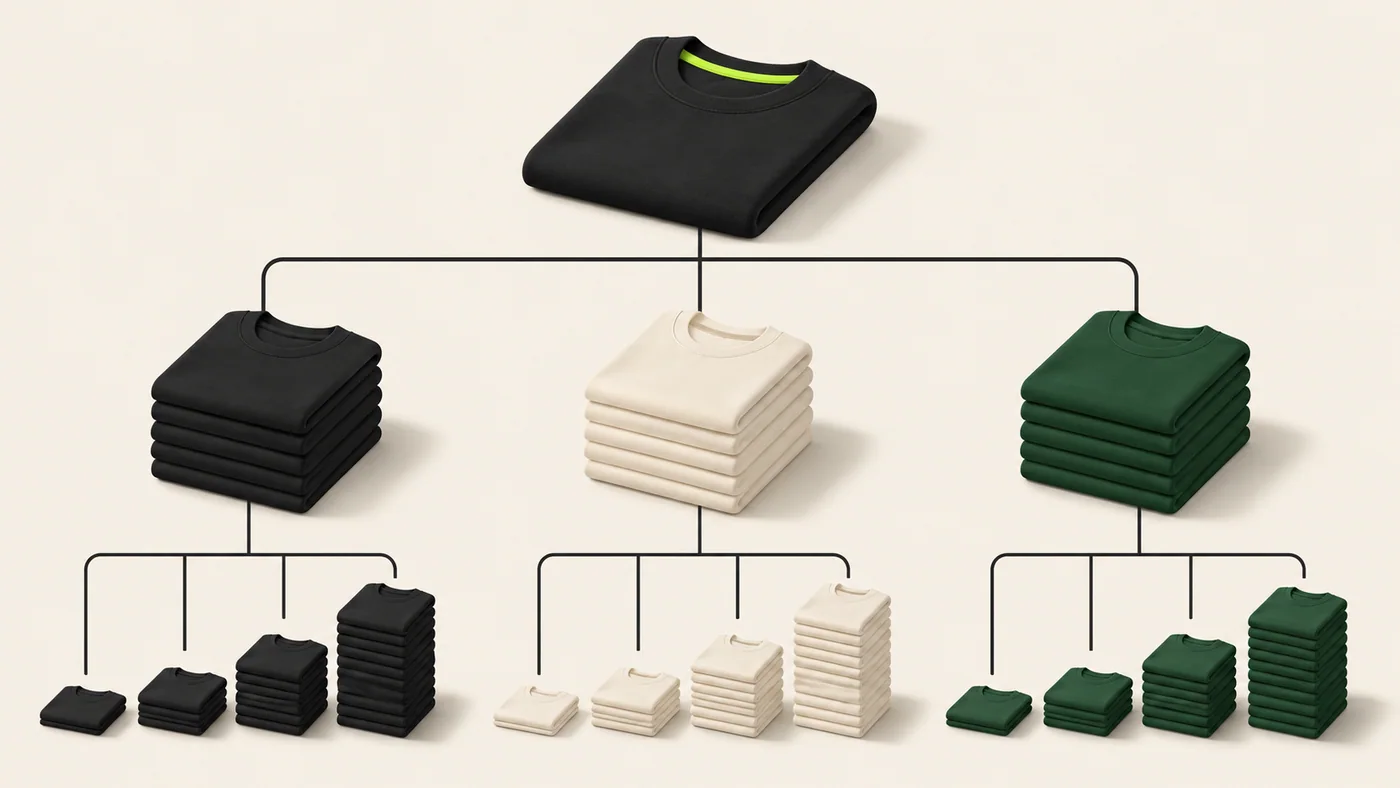
A per-color minimum is often spread across the size run. Some suppliers, though, set a minimum per size, or limit very uneven splits and extended sizes. Ask directly: "Can the pieces in one color be split across S–XXL however I choose? Is there a minimum per size?" At STREETTEECO, the 50 pieces in each style and color can be split across sizes freely, with no separate minimum per size. How to split sizes for your own customers is covered in the first-drop quantity guide.
The minimums underneath the garment MOQ
The garment MOQ is what the factory sews. Materials and processes carry their own minimums, and those can decide the real starting quantity.
Fabric
If the fabric comes from stock, meaning a jersey or fleece already held in that color, the order can usually follow the garment minimum. If it has to be knitted or dyed to order for your color, weight or composition, the mill's minimum applies. That minimum is often counted in kilograms or rolls per color, and it can be more than a small garment order uses. Ask which colors are stock and which are dyed to order. The fabrics and GSM page lists the weight ranges we work in.
Trims and labels
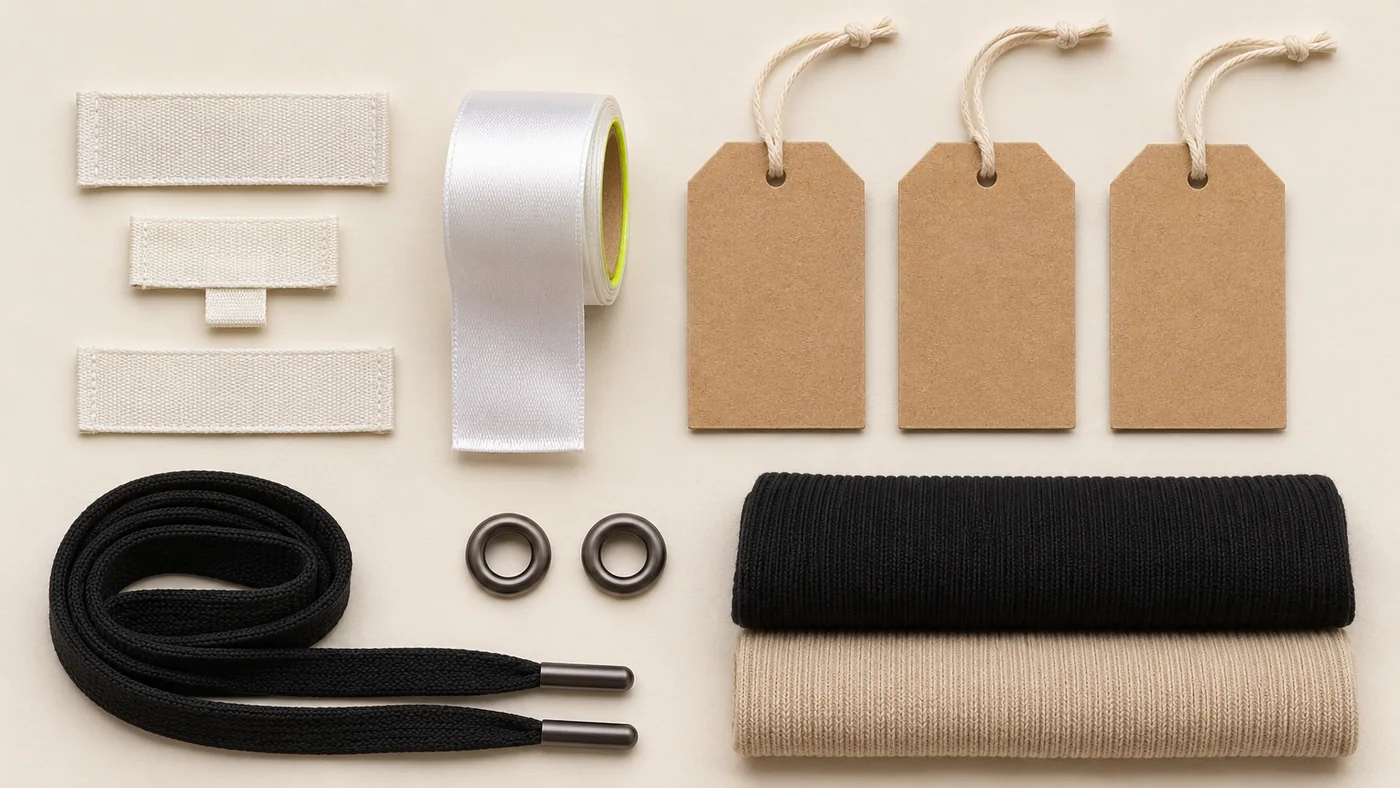
Woven labels, printed care labels, hang tags, custom bags, custom zippers, drawcords, tips and eyelets can each have a minimum. Some, such as woven labels, are cheap per piece at a larger minimum, so brands often order labels to cover more than one run. See private label services for the trims we coordinate.
Rib and color matching
On hoodies and many tees, the cuff, hem or collar rib should match the body fabric. If the rib is dyed separately to match, it may have a dye minimum of its own.
Decoration setup
Screen printing and puff print need setup for each color and print location, and embroidery needs digitizing. These are often charges rather than minimums, but on a small run the setup cost is spread over fewer pieces.
Wash and dye batches
Garment dye and washes run in batches, so their minimum may be counted per color or per batch rather than per style.
Why tee and hoodie minimums can differ
A hoodie uses more fabric per piece, combines fleece with rib, and often adds trims: a drawcord and eyelets, or a zipper on a zip-up. That makes fabric and trim minimums more likely to set the practical starting quantity for hoodies than for basic tees. When you plan a drop with both, check the minimum for each category separately instead of assuming one number covers both. The hoodie styles page shows the fleece weights and constructions involved.
Compare a Streetwear Essential Tee with a Full Zip Streetwear Hoodie when building the quote. Jersey, fleece, rib and zipper choices create different material and trim requirements; confirm each style and color separately.
Reorders, added colors and leftovers
- Reorders: ask whether reorders follow the same minimum, and whether a color added later is counted on its own.
- Mixing colors to reach a minimum: this works on a per-style basis, but not when the minimum is per style per color.
- Stock or dyed-to-order: stock colors make small runs easier, while custom colors may need larger fabric orders.
- Leftover material: ask whether surplus fabric or labels from a minimum can be held for your next order, and for how long.
Worked example: one drop, two counting rules
Take a first drop with one boxy tee in three colors and one hoodie in two colors. Figures are illustrative.
| Rule | Tee (3 colors) | Hoodie (2 colors) | Total |
|---|---|---|---|
| 50 per style | 50, colors mixed | 50, colors mixed | 100 |
| 50 per style per color | 3 × 50 = 150 | 2 × 50 = 100 | 250 |
| Same rule, custom-dyed fleece | 150 | Set by the fleece dye minimum if it exceeds 100 pieces' worth | Ask the supplier |
Cutting one color from each product brings the per-style-per-color total down to 150 pieces. That is often the more realistic first step, and it gives each color more depth.
Questions to ask before you plan your range
- Is the MOQ per order, per style, or per style per color?
- Can sizes be split freely within it? Is there a minimum per size?
- Which fabric colors are in stock, and what is the minimum for a custom color?
- Which trims have their own minimums: labels, tags, packaging, zippers, drawcords?
- Are decoration setups charged per color or per location?
- Does a wash or dye have its own minimum?
- Do reorders and added colors follow the same minimum?
- Does the unit price change near the minimum?
These belong in the same brief you send when choosing a streetwear manufacturer, so every supplier answers on the same basis. If the minimums are the deciding factor, compare them with the blank route in blanks vs cut and sew.
STREETTEECO's minimum
Our standard minimum is 50 pieces per style per color. Within each style and color, you choose the size split freely: weight the 50 pieces toward the sizes you sell most, or spread them across the whole run. Any fabric, trim, decoration or wash requirements for your specification are confirmed in the quote. Development samples take 7–10 working days. Bulk production takes 14–25 working days, counted from receipt of payment for the bulk order. See wholesale programs for repeat orders and custom T-shirt manufacturing for the development route.
FAQ
What does MOQ mean in clothing manufacturing?
Minimum order quantity: the smallest number of pieces a manufacturer will produce on a stated basis, such as per order, per style, or per style per color.
Is MOQ counted per color or per style?
It depends on the supplier. Many apparel factories count per style per color, because each color usually needs its own fabric dye lot and cutting. Others count per style or per order. Ask for the basis in writing.
Can I mix sizes to meet the MOQ?
Often the sizes within one color count together, but some suppliers set a minimum per size or limit very uneven splits. Confirm this before you plan quantities.
Why is the fabric minimum higher than the garment MOQ?
When fabric has to be knitted or dyed to order, the mill's minimum applies, and it can exceed what a small garment order uses. Choosing a stock fabric color can avoid it.
Do hoodies have a higher MOQ than T-shirts?
Not always at garment level. But fleece, rib and trims are more likely to carry their own minimums, which can raise the practical starting quantity for hoodies.
Check the minimums for your range
Send your styles, colors and target quantities. We'll confirm the minimum for each item, including fabric and trims, in one quote.
Request a QuoteWholesale Programs