What to Include in a Clothing Tech Pack Before Requesting Samples
Short answer
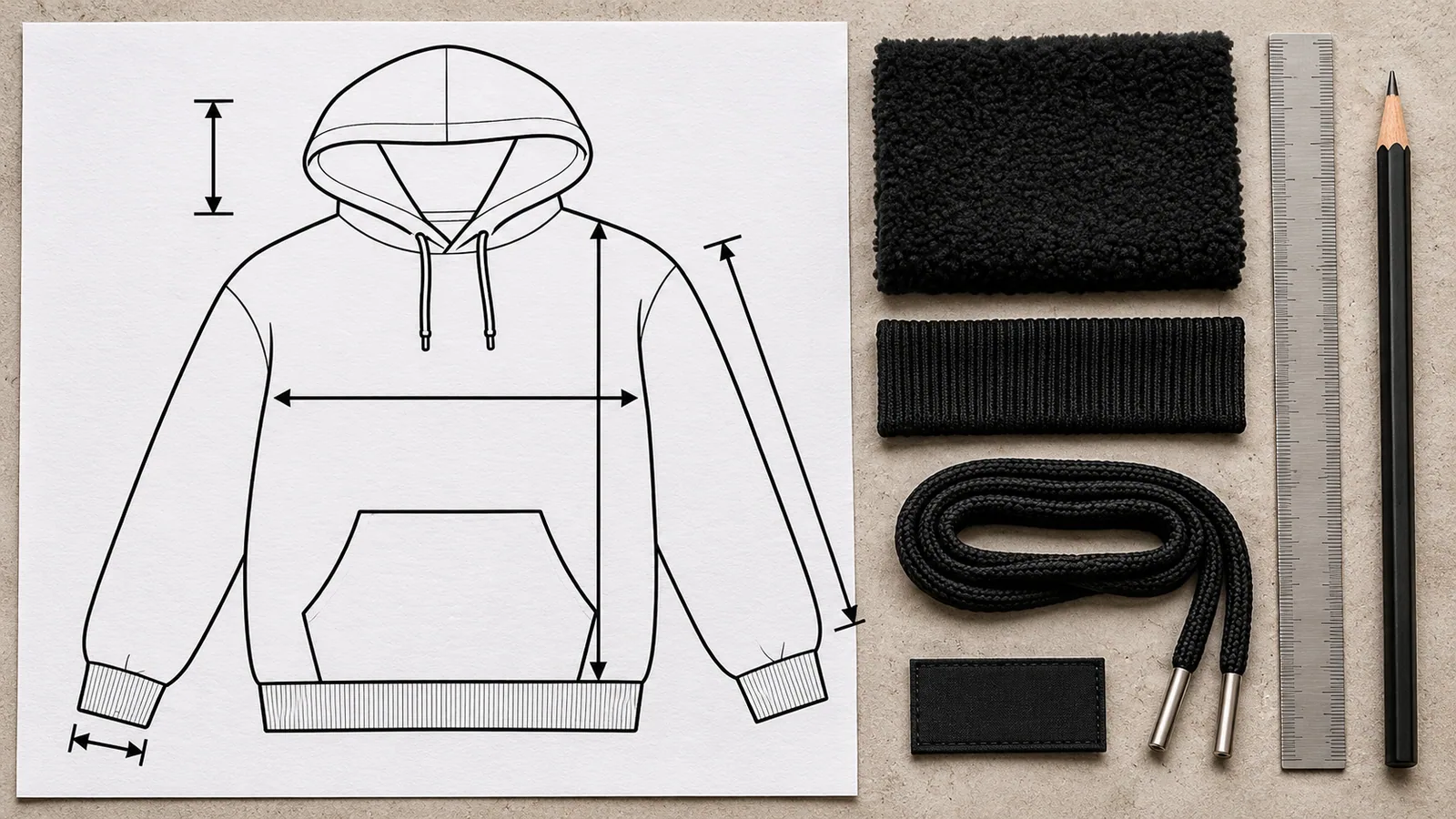
A tech pack is ready for sampling when a factory could make the garment without guessing. For a streetwear hoodie that means front, back and hood flats, a size chart that includes the hood and pocket and says how each point is measured, and a bill of materials covering fleece, rib, drawcord and eyelets. It also needs construction notes, artwork size and placement, label positions and a version date. A styled render shows what the garment should look like. The tech pack tells the factory how to make it.
Scope and evidence. This is a checklist of what to include, not a pattern-making or grading course. Measurement points and examples are illustrative, and the right values come from your own fit reference. A factory can help fill gaps during sampling, but every gap becomes an assumption.
Most first tech packs are made by designers who know exactly how the hoodie should look but not every measurement a pattern maker needs. The gaps tend to repeat: a hood with no measurements, a size chart without a measuring method, or fleece described only as "heavy". This clothing tech pack checklist is written around a streetwear hoodie, with notes on what changes for a tee.
Render or production file: know which you have
| Item | Design render or mockup | Production tech pack |
|---|---|---|
| Shape | Looks right on a model or a 3D body | Measured: chest, length, shoulder, sleeve, hood and pocket for each size |
| Fabric | "Heavy black fleece" | Composition, weight in GSM, face and back, and shade reference |
| Details | Visible in the image | Called out: seam types, stitch, rib height, eyelet type, drawcord spec |
| Artwork | Placed by eye | Size, method, colors and distance from fixed garment points |
| Changes | Overwritten | Version number or date, with a change log |
Keep the render. It is useful context, but it shouldn't be the only file you send.
The checklist at a glance
- Cover page: style name or number, season, version, date, contact and base sample size
- Flats: front, back, side, and the hood both flat and as worn, plus inside views where construction matters
- Points of measure: a diagram showing where each measurement is taken
- Size chart: values for the base size at least, with the measuring method stated
- Bill of materials: every fabric, trim and label
- Construction notes: seam and stitch types and how parts are assembled
- Artwork pages: method, size, colors and placement for each location
- Labels and packaging: what goes where and how it is attached
- Version log: what changed, when, and who approved it
Flats and callouts
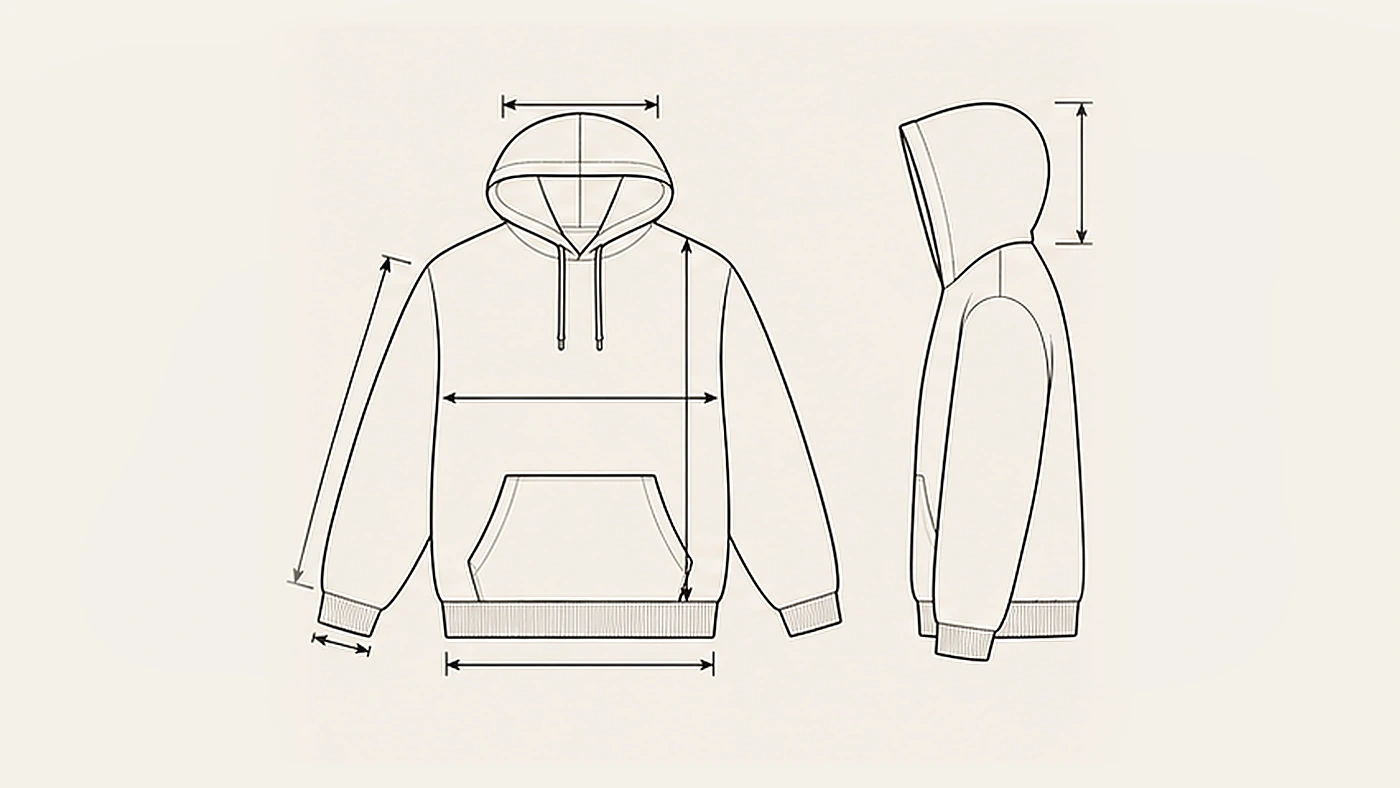
Draw flats as technical line drawings, not illustrations. Show the hood both flat and as worn, because its depth and opening are hard to read from the front view alone. Add callouts for every detail a sample maker could interpret in more than one way: hood panel count, whether the hood is lined, pocket shape and opening, rib height at cuff and hem, eyelet position, and any topstitching.
Points of measure for a hoodie
A size chart is only useful when everyone measures the same way. For each point, state where it starts and ends. For rib, also say whether it is measured relaxed or stretched.
| Area | Points to include | Define clearly |
|---|---|---|
| Body | Chest width, body length, shoulder width, armhole, bottom width above rib | Chest measured a set distance below the armhole. Length from the high point of the shoulder |
| Sleeve | Sleeve length, bicep, cuff opening, cuff rib height | Length from the shoulder seam or from center back, especially on drop-shoulder fits |
| Hem | Hem rib height and hem width | Relaxed or stretched |
| Hood | Hood height, hood width, hood opening, front neck overlap if any | Hood height from the high point of the shoulder to the top of the hood, measured flat |
| Pocket width, height, opening length, placement from the hem or center front | Which reference point the placement is measured from | |
| Neck | Neck width and front neck drop | Seam to seam or edge to edge |
For a first sample, the base size alone is enough to start, as long as you say which size it is. Add the graded values, or the grade rules, before bulk. Tolerances can be agreed with the factory. The quality standards page explains how measurements are checked in production.
Bill of materials
List every component with enough detail to source it. For a hoodie that usually means:
- Shell fabric: composition, weight in GSM, structure such as French terry or brushed fleece, face and back, and the color reference. Our fabrics and GSM page shows the fleece weights we work in.
- Rib: composition, any elastane, weight, and whether it matches the body color
- Hood lining, if the hood is lined: same fabric or a contrast
- Drawcord: flat or round, width, length, color and tip type
- Eyelets: metal or embroidered, size and finish
- Zipper, for a zip-up: type, length, puller, color and whether it's branded
- Thread: color matched or contrast
- Labels and tags: neck label, care label, size label, hang tag. See care labels and hang tags
Each item on this list can carry its own cost and minimum, which is why a complete bill of materials makes quotes easier to compare. See why samples cost more than bulk.
Construction notes
- Seam types for the body, sleeves and hood, such as overlock, coverstitch or flatlock
- Hood construction: two-panel or three-panel, lined or single layer, and how the drawcord channel is finished
- Pocket construction: kangaroo or split, bound or folded edges, and bartacks at the openings
- Rib attachment at the cuffs and hem
- Any wash or garment dye after sewing, which affects shrinkage, so say whether the size chart is before or after washing. See garment dye
Artwork and placement
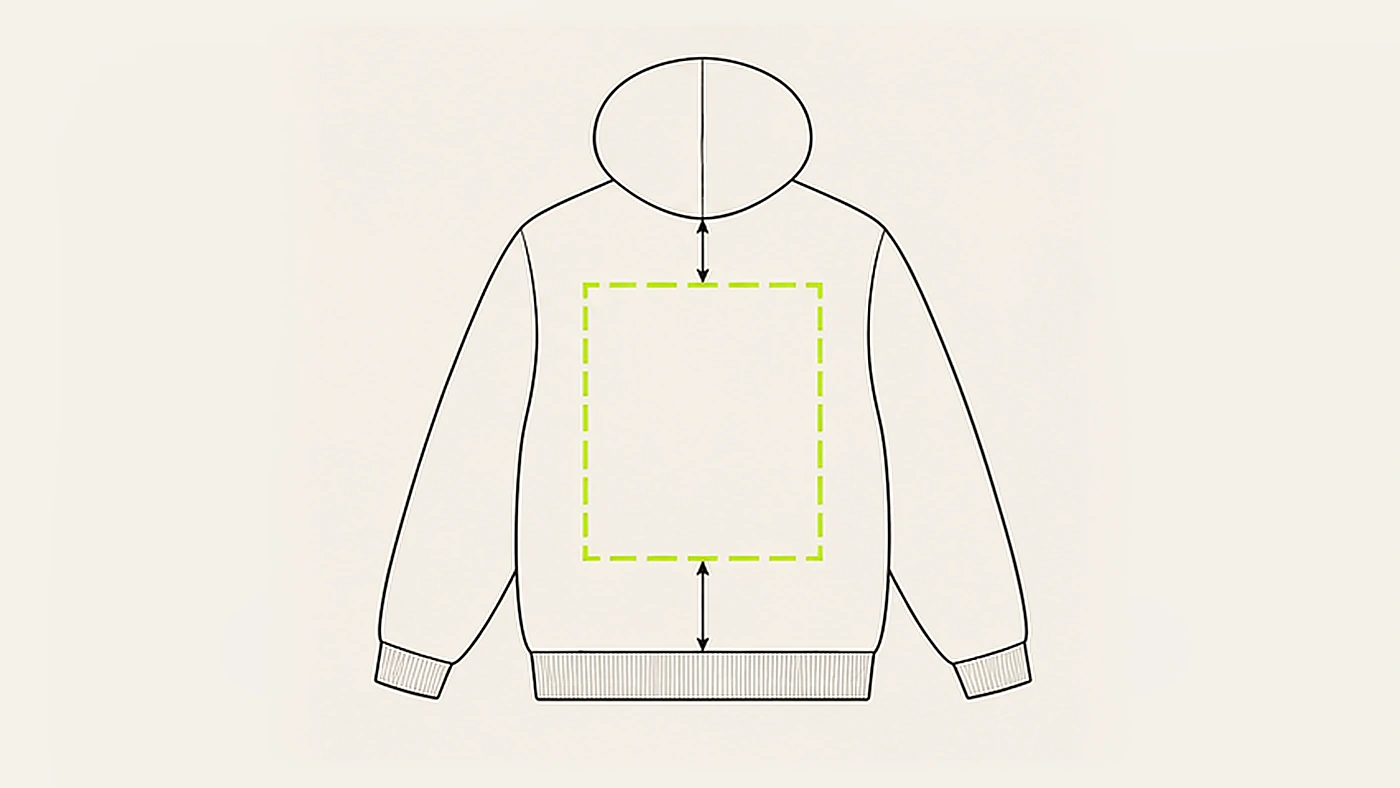
For each print or embroidery location, give the method, the finished size, the colors as Pantone references or physical swatches, and the position measured from a fixed point. Common fixed points are the high point of the shoulder, the center front, the hem or the hood seam. Say whether the artwork stays the same size across sizes or is scaled. Attach vector files where possible. Hood and sleeve prints need a note on the seam they must clear.
Labels, packaging and the version log
Show each label's position, such as inside back neck or left side seam, its size and how it is attached. Add packaging details if they matter for the sample: fold, bag and hang-tag attachment. Finally, keep a version log with the date, what changed and who approved it. When samples go back and forth, the version log is what stops the factory sewing from last week's file. Our private label services cover the label and packaging side.
What changes for a T-shirt
A tee tech pack has the same structure with fewer parts. Points of measure focus on the collar: rib width, neck opening and front neck drop. The bill of materials is usually just jersey, collar rib, thread and labels. On boxy and drop-shoulder tees, define the shoulder and sleeve measurements carefully, as on a hoodie. If tees and hoodies are sold as a set, put shared colors and labels on one reference page so both packs use the same standards.
If you're starting from one of our bases, name it in the tech pack, for example the Oversized Streetwear Hoodie or the Oversized Drop-Shoulder Tee, and list only the changes you want.
Common gaps that slow down sampling
- No hood measurements, so the hood comes back shallower or deeper than intended
- Measurements without a method, so the sample "doesn't match" because it was measured differently
- Fleece described as "heavy" or "premium" without a weight or structure
- Artwork with no size, or placed only on a mockup
- Stand-in labels not marked as stand-ins, so they reach bulk by mistake
- Several file versions with no dates
Each gap usually costs an extra correction round. The production timeline guide shows what that does to a launch date.
Tech pack support at STREETTEECO
You don't need a finished tech pack to start with us. Send a sketch, a reference garment, measurement notes or an existing file, and our tech pack support turns it into a specification for sampling and bulk. Development samples typically take 7–10 working days. The approved sample and the versioned specification then become the reference for bulk. To request a sample, see order a sample.
FAQ
What should a clothing tech pack include?
Flats, a points-of-measure diagram, a size chart with the measuring method, a bill of materials, construction notes, artwork size and placement, label and packaging details, and a version log.
What hood measurements does a hoodie tech pack need?
At least hood height, hood width and hood opening, with each starting point defined, such as hood height from the high point of the shoulder, measured flat. Say whether the hood is lined and how many panels it has.
Do I need graded sizes before the first sample?
Not necessarily. The base size with a clear measuring method is enough to start. Add graded values or grade rules before bulk.
Can I send a 3D render instead of a tech pack?
A render helps show the look, but it doesn't give measurements, materials or construction. Send it with a reference garment or measurements, or ask the factory to help build the specification.
Should the size chart be before or after washing?
State which one. For washed or garment-dyed hoodies the difference can be significant, so agree whether the chart describes the finished, washed garment.
Send what you have
A sketch, a reference hoodie or a draft tech pack is enough to start. We'll point out the gaps before sampling begins.
Request a QuoteTech Pack Support