Clothing Production Timeline: From First Sample to Bulk Delivery
Short answer
A clothing production timeline has two clocks. Factory time runs from the brief through samples to finished bulk. Landed time adds freight, customs, receiving and getting the stock ready to sell. Plan backwards from the launch date, give every stage its own line, and leave room for sample corrections you can't predict yet. The factory's lead time is one line in that plan, not the whole plan.
Scope and evidence. No supplier can promise a fixed delivery date before your specification is final. Our sample and bulk times are given as our own. Freight, customs and receiving times depend on your route and partners and are left for you to fill in. The worksheet below is a planning tool, not a delivery commitment.
Many delayed launches started with a sum like "bulk takes four weeks, so we start four weeks out." Bulk is only one stage. The weeks are usually lost before it, in sample rounds and late approvals, and after it, in freight and receiving. This guide lays out the full clothing production timeline for a streetwear drop and shows where to put buffers.
Factory time vs landed time
| Stage | What happens | Whose clock |
|---|---|---|
| Brief and tech pack | Specification, references, artwork and quantities are agreed | Shared: your files, the factory's questions |
| Materials for sampling | Fabric, rib and trims are found or stand-ins chosen | Factory and its suppliers |
| Sample rounds | Sample made, shipped, reviewed and corrected | Shared: the factory makes, you review |
| Final approval | Fit, fabric, color, decoration and labels signed off in writing | You |
| Bulk payment and materials | Payment, bulk fabric dyeing or purchase, label production | You, then the factory |
| Bulk production | Cutting, decoration, sewing, washing, finishing and packing | Factory |
| Final inspection | Inspection against the approved sample and written requirements | Factory, or your inspector |
| Freight | Express, air or sea to your destination | Forwarder or carrier |
| Customs and delivery | Import clearance and final delivery | Broker or carrier |
| Receiving and prep | Counting, checking, put-away, photography, listings | You or your warehouse |
Only the middle rows belong to the factory. Your launch date depends on every row.
Before the first sample
The quickest way to shorten sampling is to start it with complete files. A tech pack with hood, body and pocket measurements, a clear bill of materials and final-size artwork lets the first sample test your design rather than the factory's guesses. Settle early which colors are stock and which must be dyed. A custom color usually needs a lab dip, a small dyed swatch approved before the bulk fabric is dyed, and that adds a step.
Sample rounds: the part you can't fix in advance
Each round covers making the sample, couriering it, reviewing it, and sending written corrections. The number of rounds depends on how complete the first brief was, how many details are new, and how quickly comments go back. Nobody can promise it in advance. Plan for it explicitly:
- Put your own review time on the calendar. A sample left unopened for a week costs a week.
- Send comments as one consolidated list, not a series of messages.
- Review photos and measurements before the courier, so obvious fixes happen before shipping.
- Approve fit and fabric before decoration and labels, so later rounds change fewer things. See the sample page.
Every round also costs money as well as time. See why samples cost more than bulk.
Bulk: when the clock actually starts
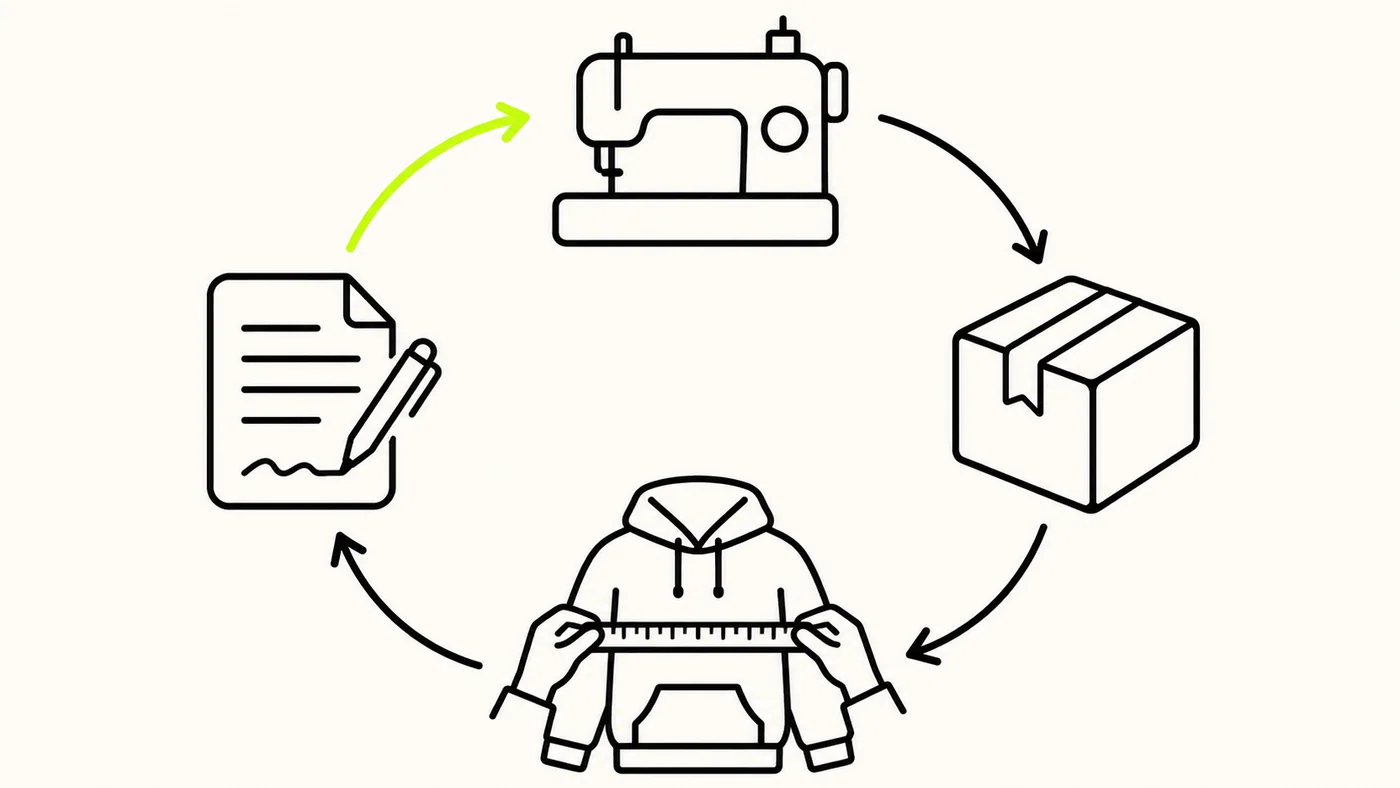
Ask exactly which event starts the bulk lead time. It might be sample approval, receipt of a deposit, or receipt of full payment. A lead time counted from payment doesn't begin while an invoice is waiting for approval in your accounts team. At STREETTEECO, bulk production takes 14–25 working days, counted from receipt of payment for the bulk order.
Bulk timing within that window depends on the specification: custom-dyed fabric, garment dye or wash, multi-color screen print, puff print, embroidery and custom trims all add steps. Labels and hang tags should be approved before bulk starts, so they are ready when garments reach packing. Remember that "working days" exclude weekends and public holidays. Many factories in China close for a period around the Lunar New Year, so plan orders around it early.
After the factory: freight, customs and receiving
Factory completion is not the day stock is ready to sell. Ask your forwarder or carrier for transit times on your actual route, by express, air or sea, and add customs clearance and final delivery. Then add your own receiving time: counting cartons, spot-checking against the approved sample, and getting stock into your warehouse or fulfillment partner. Product photography and listings also need garments. Many brands shoot on approved samples or ask for a few early pieces so content is ready before bulk lands.
Plan backwards from launch day
| Line | Source of the figure | Your figure |
|---|---|---|
| Launch date | Your marketing plan | [ ] |
| Receiving, photography and listings | Your warehouse and content team | [ ] |
| Customs and final delivery | Your broker or carrier | [ ] |
| Freight transit | Your forwarder, for the mode you choose | [ ] |
| Bulk production | Supplier quote. STREETTEECO: 14–25 working days from receipt of bulk payment | [ ] |
| Payment processing | Your finance team | [ ] |
| Sample rounds | Rounds you plan for × (sample time + courier + your review) | [ ] |
| Brief and tech pack | Your design team | [ ] |
| Buffer | Your judgment, larger for first orders and new details | [ ] |
| Latest project start | Launch date minus every line above | [ ] |
If the latest start date has already passed, change the plan rather than hoping for speed: simplify the decoration, use stock fabric colors, move the hoodie to a later drop, or choose a faster freight mode and accept the cost.
Tees and hoodies on different calendars
Hoodies often sell seasonally, so a late hoodie misses demand. A tee can still sell when it arrives late. Hoodies also have more parts to approve, such as the hood, pocket, rib and drawcord, and they are heavier and bulkier to ship, which affects freight cost and the mode you choose. If a tee and a hoodie launch together, start the hoodie's sampling first, or plan the tee to launch first and the hoodie later. The hoodie line guide covers which hoodie details need their own approval.
For a seasonal drop, compare a Thermal Fleece Hoodie with a Heavyweight Streetwear Tee. The hoodie has more components to approve, so give it the earlier sampling slot.
Common ways launches slip
- Artwork or colors changed after the sample was approved
- Labels or packaging approved late, so finished garments wait to be packed
- Bulk payment sent later than planned, which moves the whole bulk window
- Sample reviews left for days, or comments sent piece by piece
- No allowance for holidays at either end
- Freight booked only after production finished
- No time left for receiving checks or photography
Timing with STREETTEECO
Development samples typically take 7–10 working days. Bulk production takes 14–25 working days, counted from receipt of payment for the bulk order. Our minimum is 50 pieces per style per color. Exact timing for your project is confirmed in the quote once the specification is known. Our production sequence shows the steps inside the factory, and quality standards explains the checks before shipment. To plan quantities alongside the calendar, see the first-drop quantity guide.
FAQ
How long does clothing production take from sample to delivery?
It depends on how many sample rounds you need, the decoration and materials, when bulk payment is made, and the freight route. Add each stage separately instead of using one total figure.
When does a factory's bulk lead time start?
Ask the supplier, because it varies. It may start at sample approval, deposit or full payment. At STREETTEECO the 14–25 working days start when payment for the bulk order is received.
Does the production lead time include shipping?
Usually not. Freight, customs, delivery and your own receiving time come after the factory finishes, so plan them as separate lines.
How many sample rounds should I plan for?
There is no fixed number. It depends on how complete your brief is and how many details are new. Plan your own review time, send consolidated comments, and leave a buffer for at least one correction.
When should I start production for a hoodie drop?
Work backwards from the date your customers start buying hoodies, then add sampling, bulk, freight, receiving and a buffer. Hoodies have more details to approve, so start their sampling before the tees.
Check your launch date against our timing
Send your target launch date, styles and quantities. We'll confirm sample and bulk timing for your specification so you can plan the rest.
Request a QuoteOrder a Sample