How to Reduce Differences Between Clothing Samples and Bulk Orders
Short answer
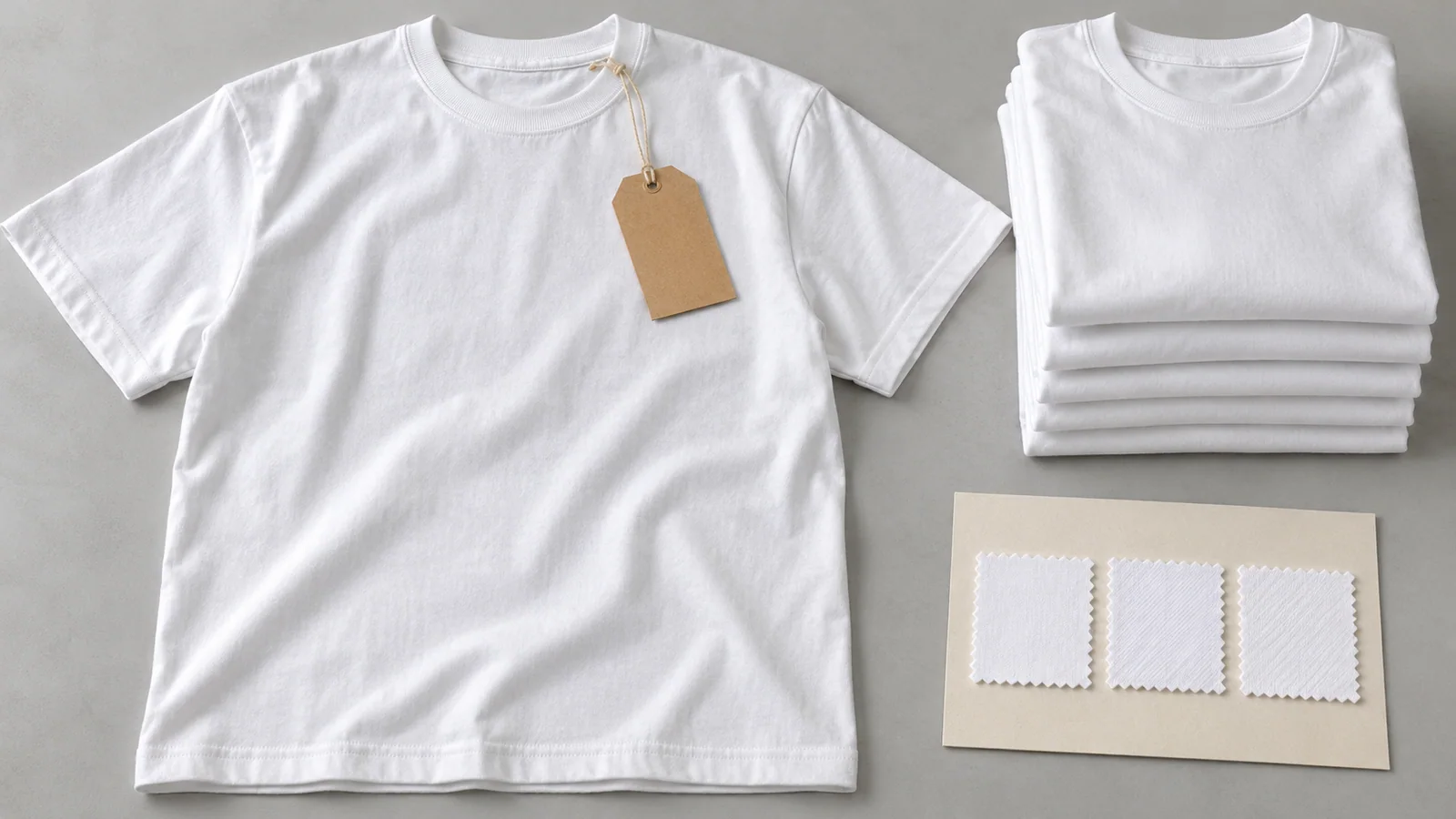
Bulk drifts from the sample when the sample was made under different conditions, or when approval was only a "looks good" in a chat. The conditions that change are fabric from another lot, stand-in labels, a different decoration method, a sample room instead of a production line, and a single size instead of a size run. To keep clothing sample and bulk production matched, approve a physical reference sample, agree in writing what it does and doesn't represent, and keep a reference pack that both sides check bulk against.
Scope and evidence. This guide is about making the first bulk order match the approved sample. It doesn't cover individual tests such as shrinkage or wash fastness, and gives no tolerance values: tolerances are agreed per project. Our inspection method is described as our own.
Typical complaints after a first bulk delivery: the white is a different white, the neck label isn't the one on the sample, the body is shorter, the print sits higher. Each one usually traces back to something that differed between how the sample was made and how bulk was made, or to something nobody wrote down. This guide goes through those causes and the records that prevent them.
Why bulk can differ from the sample
- Fabric lot. Bulk fabric is dyed or bought at quantity, often in a different lot from the sample length. Shade and hand feel can shift between lots.
- Stand-ins. The sample used a stock color, a stand-in label or a stock zipper because the custom version wasn't ready.
- Decoration method. The sample was printed in DTF to save setup, and bulk is screen printed. Or the sample print was hand-placed and bulk uses a fixed platen position.
- Sample room vs line. A sample maker sews one piece carefully. A production line repeats operations at speed, so details like rib tension or topstitching need a clear standard.
- One size vs a size run. The sample was the base size, and the grading for other sizes was never checked on a garment.
- Wash batches. A garment dye or wash on one piece doesn't always match a full machine load.
- Unrecorded changes. A correction agreed on a call never reached the specification sheet.
From symptom to cause
| What looks different | Likely cause | Record that prevents it |
|---|---|---|
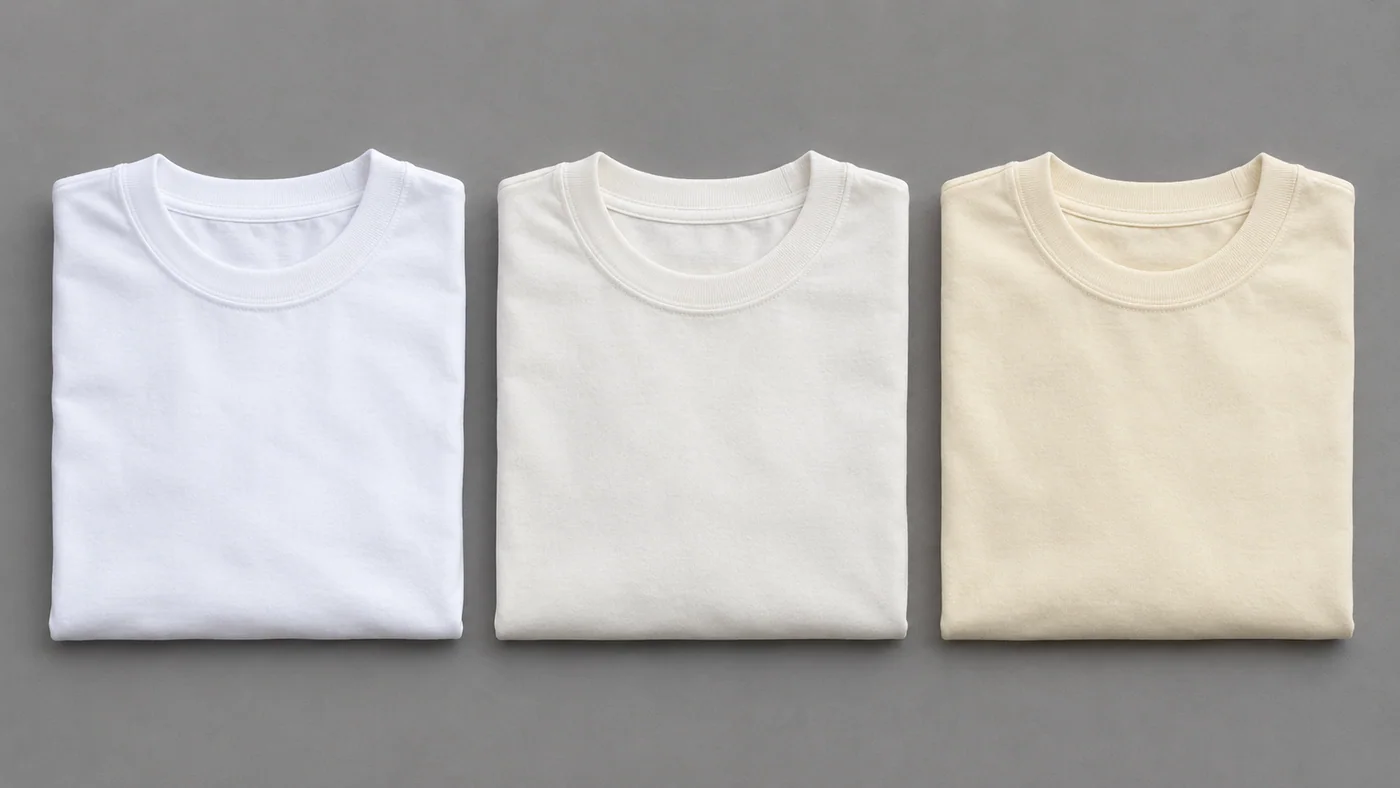
| White or cream tone | Different fabric lot or optical brightener, or compared under different light | A physical color standard, a bulk fabric swatch approved before cutting, and an agreed light source |
| Body length or width | Measured a different way, ungraded sizes, or shrinkage after wash | Size chart with the measuring method, before or after wash, plus tolerances |
| Neck or care label | The sample carried a stand-in, or the final label was approved late | A label and trim board showing the approved final items |
| Print position or size | Placed by eye on the sample, or not adjusted for sizes | Placement spec measured from fixed points, per size or size group |
| Print feel | Different method or ink system from the sample | Decoration method and ink type written into the specification |
| Fabric weight or hand feel | Different lot, supplier or finishing | Fabric spec with composition, GSM and finish, plus an approved swatch |
| Wash shade | A one-piece wash compared with a batch wash | An approved wash standard and an agreed acceptable shade range |
| Packaging and fold | Never shown on the sample | Packing spec: fold, bag, sticker and carton marks |
Agree what the sample represents
Before you approve, write down which decisions the sample settles and which are still open. A sample in a stock color settles fit and hand feel but not the final shade. A sample with a stand-in label settles the garment but not the label. Your approval can say: "Approved for fit, fabric weight and print placement. Final shade to be approved on the bulk fabric swatch. Final neck label to be approved from the label proof." That sentence prevents most later arguments. The sample page sets out a review order that keeps each round focused.
Build a bulk reference pack
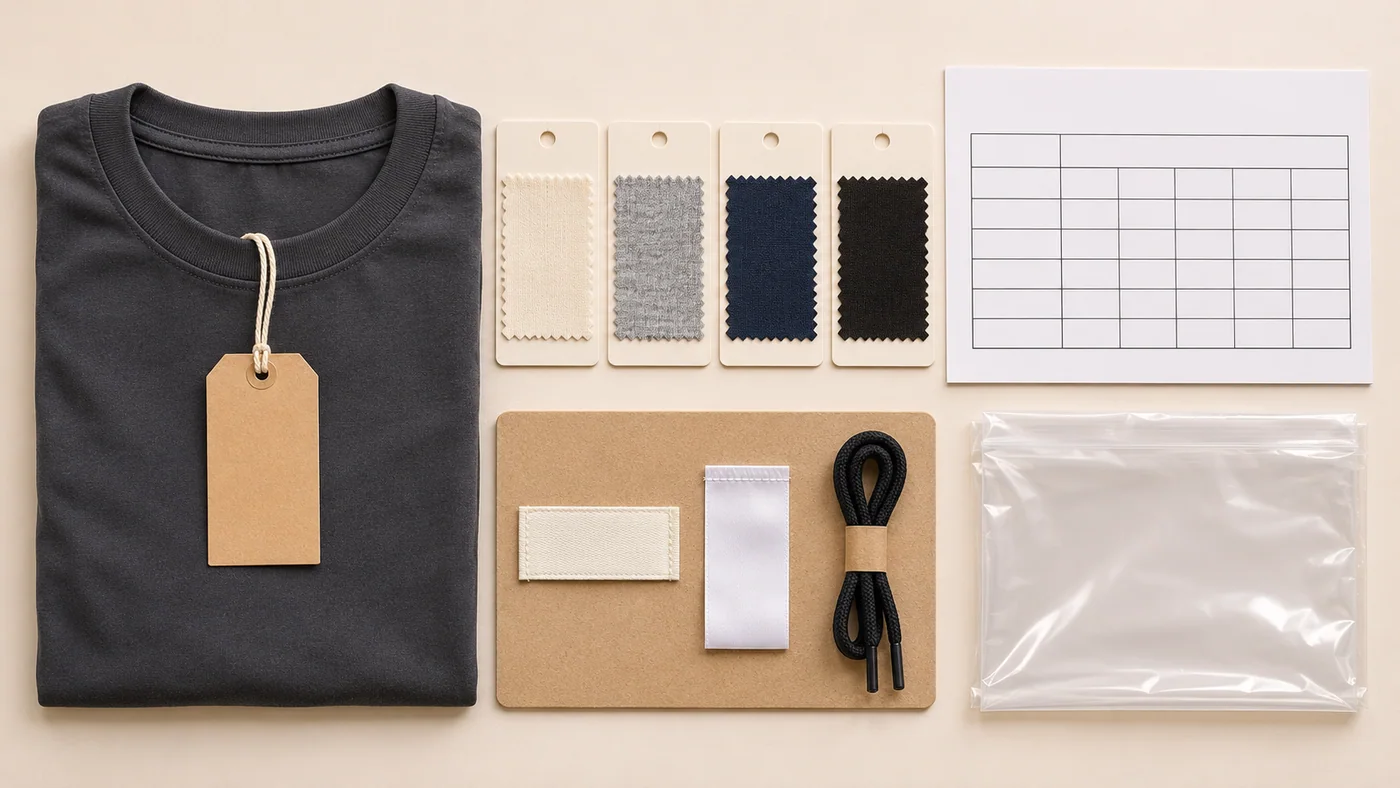
When the sample is approved, both sides should hold the same set of references:
- Sealed reference sample: the approved garment, tagged with the style, version and date. Keep one at the factory and one with you, if two can be made.
- Final specification: the approved version of the tech pack, with the date and a change log.
- Measurement chart: all sizes, the measuring method, before or after wash, and agreed tolerances.
- Color standards: an approved swatch or lab dip for each color, the light source to compare under, and the bulk fabric swatch once it exists.
- Decoration spec: method, ink type, size and placement per location, and any per-size adjustments.
- Trim and label board: the actual approved labels, tags, drawcords and zippers, or photos with their references.
- Packing spec: fold, bag, sticker, size and color identification, and carton marks.
- Open items list: anything still to approve, with a deadline before bulk.
Checks before and during bulk
- Bulk fabric swatch before cutting. Compare it with the approved color standard and the sample under the agreed light. At our factory, fabric and shade are reviewed before cutting.
- Labels and trims before packing. Confirm the bulk labels match the approved proof before garments reach packing.
- First pieces off the line. Ask for photos and measurements of early pieces across several sizes, not only the base size.
- Pre-production sample. On new or complex styles, such as a heavy washed hoodie or a large puff print, ask whether a sample can be made from bulk materials before the full run.
When a tee and hoodie are sold as a set, check jersey and fleece shades side by side. They take dye differently even when they share a color name.
Washed and garment-dyed styles such as the Vintage Washed Tee and the Vintage Washed Streetwear Hoodie need an agreed shade range, because a batch wash won't reproduce a one-piece wash exactly.
Final inspection against the reference
Final inspection should check bulk against the reference pack, not against memory. Agree in advance how inspection is sampled, what counts as a major or minor defect, and who can attend: the factory's team or your own third-party inspector. At STREETTEECO, final inspection uses AQL 2.5 alongside the approved sample and written order requirements. See our quality standards.
If bulk still doesn't match
Compare the bulk against the specific reference: the sealed sample, the chart or the color standard. Photograph it with the reference in the same shot, under the agreed light, and record which sizes, colors and quantities are affected. Then raise it in writing, using the remedy process agreed before production. If you haven't agreed one yet, that belongs in the questions for choosing a streetwear manufacturer. Store the reference pack after delivery too. Reorders start from it.
How STREETTEECO links sample and bulk
We treat the approved sample and the versioned specification as the reference for bulk and for repeat orders. Our tech pack support keeps revision notes with each version. Quality control runs in three stages: confirming the standard before production, checks during production, and final inspection at AQL 2.5 against the approved sample. Development samples typically take 7–10 working days. Bulk production takes 14–25 working days from receipt of payment for the bulk order. To plan those stages, see the production timeline guide.
FAQ
Why does bulk production look different from my sample?
Common causes are a different fabric lot, stand-in labels or colors on the sample, a different decoration method, a batch wash instead of a single-piece wash, untested sizes, and changes that were agreed but never written into the specification.
What is a sealed sample?
The approved sample, tagged with the style, version and date and kept as the physical reference for bulk. Ideally one copy stays with the factory and one with the brand.
How do I make sure the white in bulk matches the sample?
Approve a physical white standard, agree the light source for comparison, and ask to see the bulk fabric swatch before cutting. A white on screen or in a photo isn't a reliable reference.
Should every size be sampled before bulk?
Not always. But check the grading on more than the base size, for example by asking for measurements or photos of early bulk pieces in the smallest and largest sizes.
What should I keep after the first bulk order?
The sealed sample, the final specification and its change log, the measurement chart, color standards, the trim and label board and the packing spec. Reorders start from these.
Set up a reference you can reorder from
Send your style and current files. We'll sample it, record the approved version, and check bulk against the same reference.
Request a QuoteQuality Standards